
Marathon Training Plan on the Wall: 16 Weeks You Can See
A training plan in an app tells you today's run. A plan on the wall tells you where today's run sits in sixteen weeks - and it is the second view that gets you to the start line. How to lay out a block on one sheet, and why a blank grid beats a printed template.
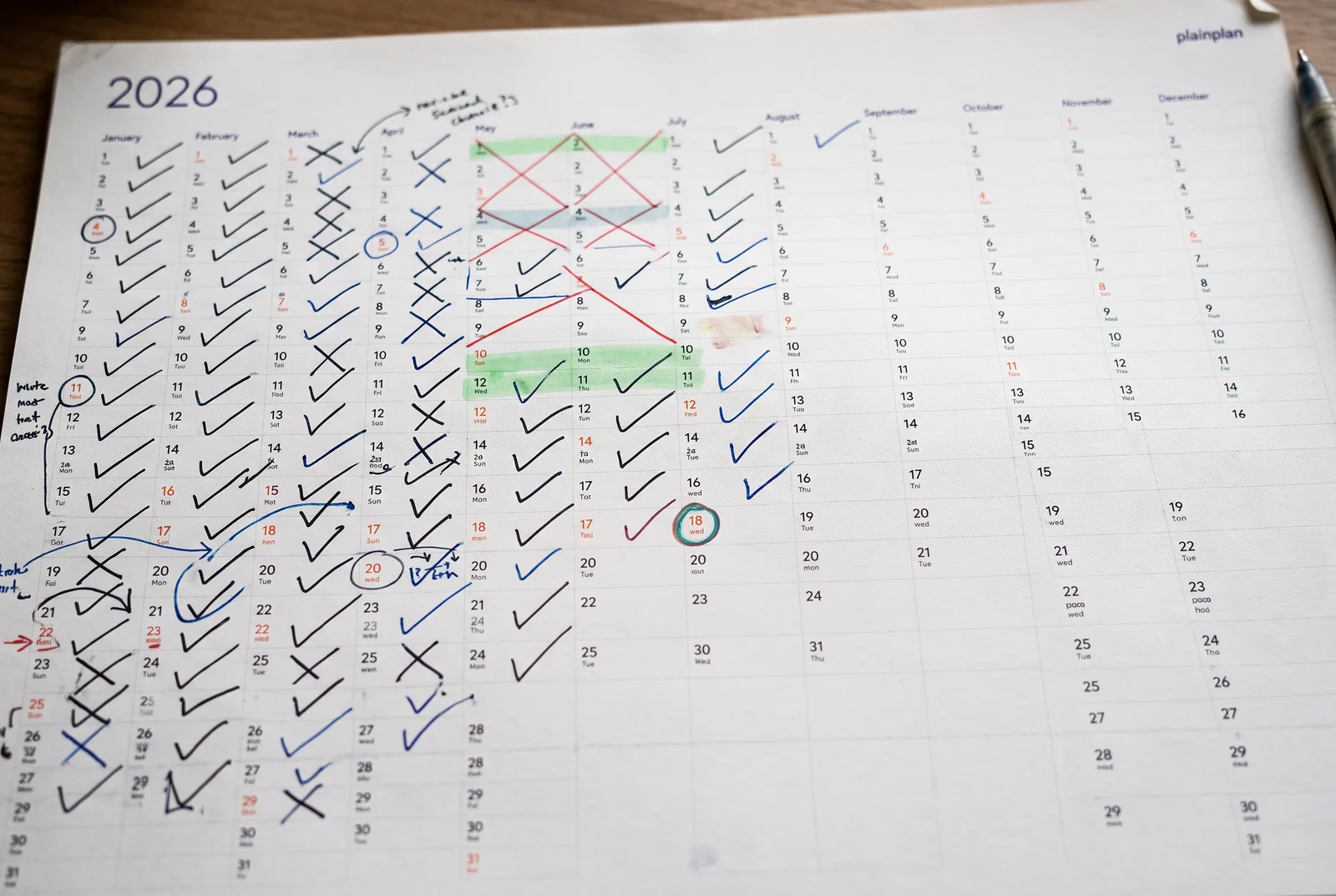
The plan is not the problem, seeing it is
Most people who miss a marathon start line do not lack a plan. They lack the sense of where they are in it - which week this is, how many long runs are left, whether the missed Tuesday matters. An app shows one day at a time and hides the shape of the block. A wall planner shows the shape and lets you find today.
plainplan is a blank year with large day cells. It is not a running planner, has no paces printed on it and does not care whether you follow a sixteen-week plan or a twelve. That is why it works for one: the plan is yours, the coach's or the club's, and the grid just holds it where you see it every morning.
Count back from race day
Circle race day first. Then count back and mark the start of the block - sixteen weeks for most first marathons, twelve for a second one on a base. Draw a light line down the day the block starts and another at the taper, three weeks out. Those three marks are the skeleton; everything else hangs off them.
Number the weeks in the margin, counting down to the race rather than up from the start. Week 5 to go is a different feeling from week 11 of 16, and the countdown is what the wall does that the app does not.
Long runs, hard days, easy days: three colours
Three colours are enough. One for the weekly long run, with the distance written in the cell. One for quality sessions - intervals, tempo, hills. Nothing, or a faint grey, for easy days and rest. The block then reads at a glance: the long runs climbing across the weeks, the hard days spaced out, the empty cells that are supposed to be empty.
Write actual distances after the run, next to the planned ones. A plan says 18; you did 16 with a stop. Both numbers on the wall, in different pens, is how the last four weeks get adjusted honestly rather than optimistically.
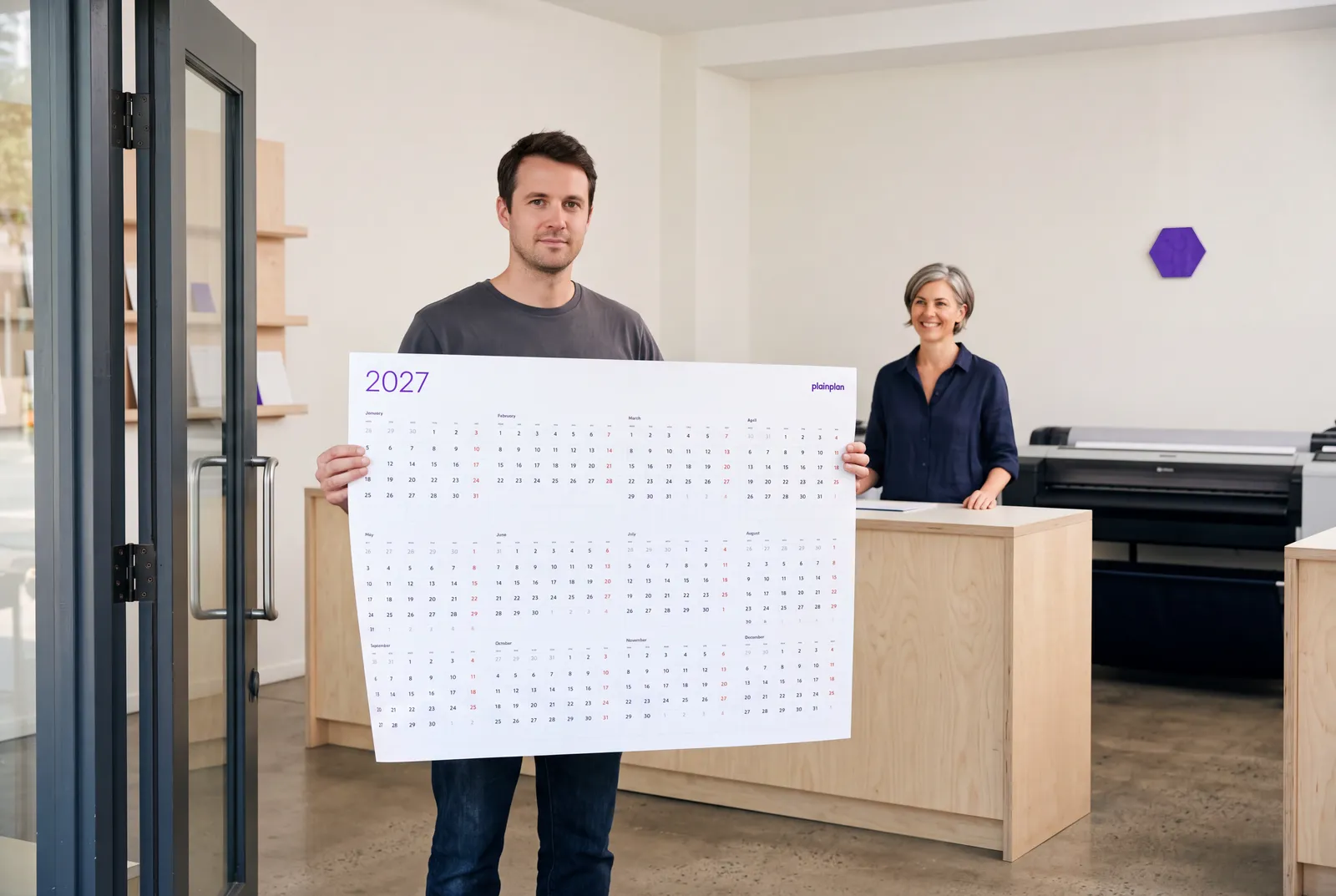
Try 2026 for free
before you buy 2027
One blank year, three highlighters and a race day circled. The same file hangs in a kitchen, an office or by the shoe rack - print it at the size that suits the wall.
The taper, drawn so you trust it
The taper is where wall planners earn their keep. On an app, three weeks of shrinking mileage look like a plan going wrong. On the wall, drawn as a visible step down after the last long run, the taper is obviously part of the shape - and the temptation to sneak in one more twenty is easier to resist when the whole block is in front of you.
Mark the last long run with a bracket and write “last one” on it. It is the most useful two words on the sheet.
Life goes on the same sheet
Work travel, a wedding, the week the kids are off school: put them on the planner in a fourth colour before the block starts. The runs that cannot happen are then visible in February, not discovered in May, and the long run moves to Saturday in advance rather than being skipped. A blank grid holds both halves of the calendar; a running app holds only one.
What to print and where to hang it
Print the Vertical layout - months side by side - at A2 for a hallway or A1 for a wall you can see from the sofa. Hang it where the shoes are: by the door, not in a study. The size guide has a reading-distance test if you are between sizes. Plain paper is fine; the block is only four months and a new sheet follows next year anyway.
The file is a vector PDF, so the same download prints at any size, and the free 2026 planner is the same grid if you want to run one block before buying next year's.
Frequently asked questions
No. The value is in seeing the whole block at once, and any large blank year does that. A dedicated running template prints paces and weeks that may not match your plan; a blank grid takes whatever plan you follow.
Vertical. A training block is a sixteen-week line, and the Vertical grid shows weeks side by side so the long runs read as a rising staircase across the sheet.
Yes - the grid does not know what sport it is. Use one colour per discipline for triathlon and the same countdown from race day.
Write it on the wall as missed, not blank, and adjust the next long run in pen. A visible missed week is a plan; an app that silently reschedules is a surprise.
