
Yearly Wall Planner vs. Monthly Calendar: Which One Actually Works?
A monthly calendar shows you 30 days. A yearly wall planner shows you 12 months. Both go on a wall - but they solve very different problems.
What is a yearly wall planner?
A monthly calendar shows you the next four weeks. A yearly wall planner shows you the next twelve months. Both go on a wall, both track dates - but they solve very different problems.
If you have ever missed a deadline because it was “next month’s problem,” or double-booked a vacation because you forgot about a conference three months out, the format you choose matters more than you think.
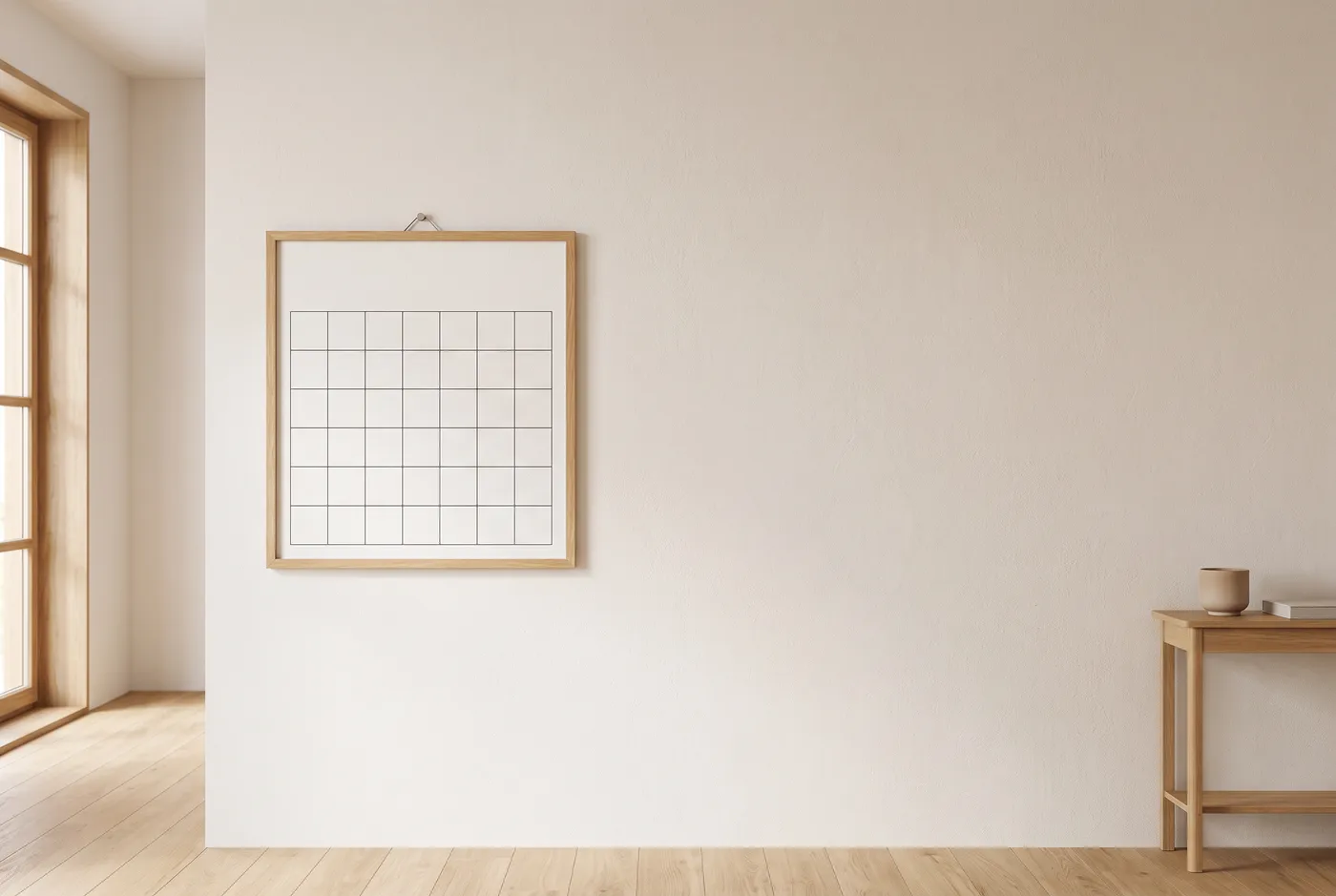
A yearly wall planner - sometimes called a year-at-a-glance planner - displays all 365 days on a single sheet. Months run in rows or columns, and every day gets a small cell where you can write a note or mark an event. The key advantage is perspective: you see school terms, holidays, project milestones, and personal events in one view. Patterns emerge that are invisible when you flip through months one at a time - how many weekends fall between two deadlines, where the long gaps are, which quarters are overloaded.
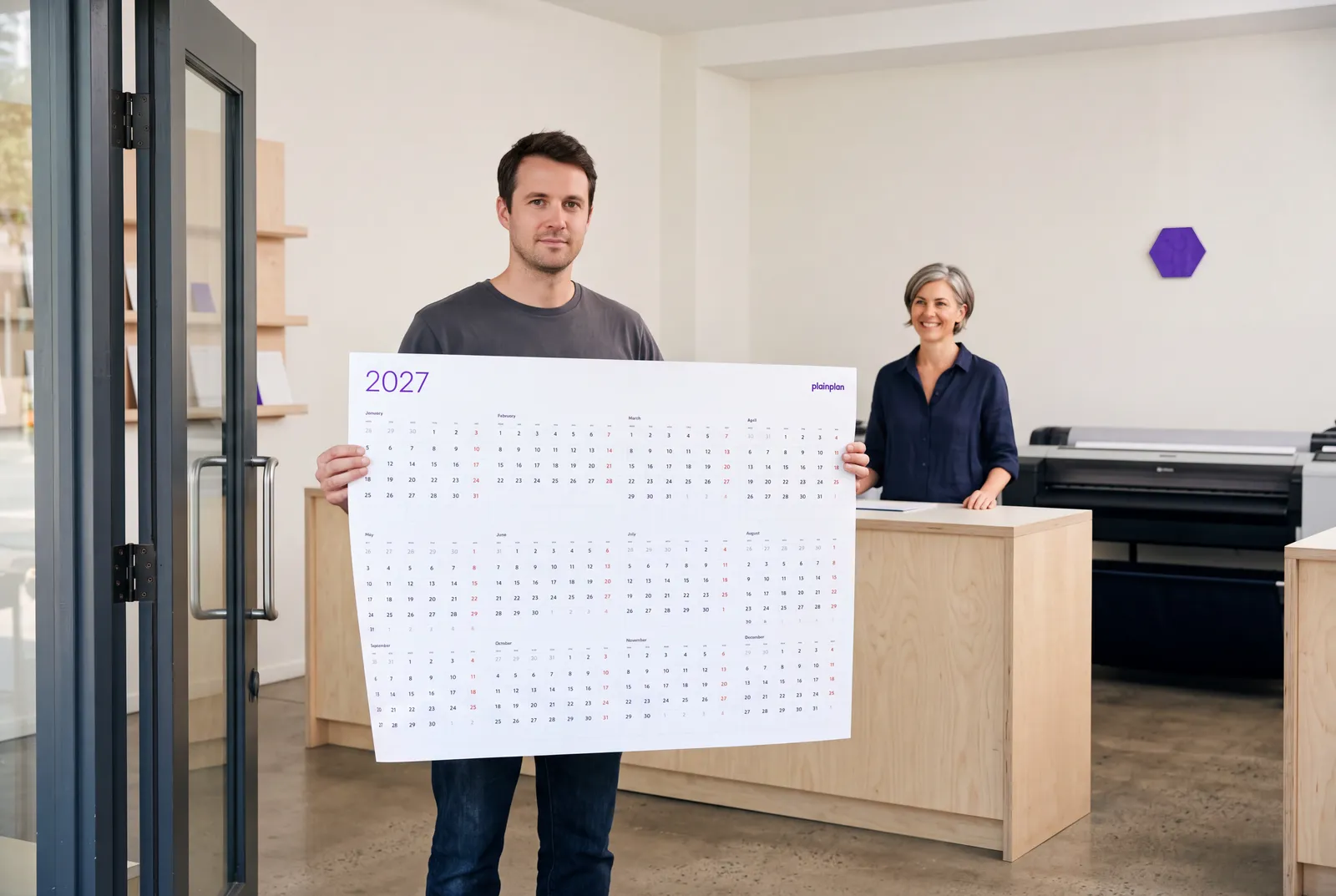
Yearly planners are typically printed at A2 or larger so the day cells remain legible. They work best on a wall you pass frequently - a kitchen, hallway, or office wall where the whole household or team can glance at it. For the full method of setting one up, read the year-at-a-glance setup guide.
Monthly calendar: pros and cons
Monthly calendars give you a detailed view of one month at a time. Each day has more space for notes, appointments, and to-do items. They are familiar, widely available, and easy to read even at smaller sizes.
The downside is tunnel vision. When you look at January, February does not exist yet. Long-term planning requires flipping pages, which most people simply do not do. Important dates three months away stay out of sight and out of mind.
Monthly calendars shine when your schedule is dense and short-term - daily appointments, hourly blocks, meal planning. They struggle when you need to coordinate across months or see how a six-month project unfolds.
Side-by-side comparison
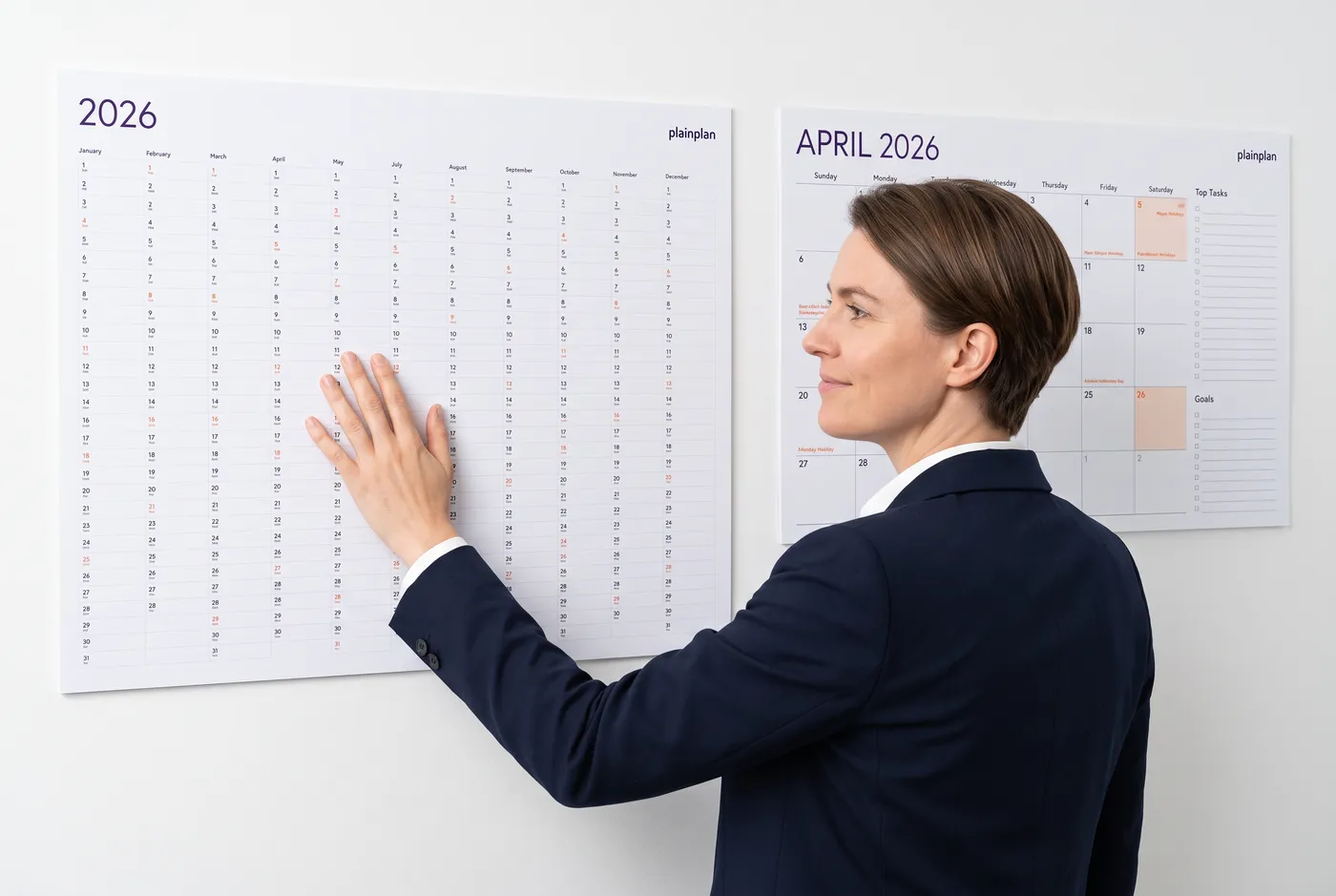
Time horizon: a yearly planner shows 12 months at once, a monthly calendar shows one. Space per day: monthly calendars win here - bigger cells, more room to write. Wall space needed: a yearly planner takes one large sheet, a monthly calendar takes a smaller frame but needs page-flipping throughout the year.
Best for long-term planning: yearly planner. Best for detailed daily scheduling: monthly calendar. Best for teams and families: yearly planner, because everyone sees the same sheet without touching it. If you want to understand how a one-page 2027 calendar fits into this, that article covers the spatial advantages in detail.
Cost and effort are similar. Both are available as printable PDFs. The real difference is whether you need to see the big picture or the daily detail. Many people use both: a yearly planner on the kitchen wall for annual context and a monthly calendar at the desk for daily scheduling.
Try 2026 for free
before you buy 2027
One file. Any wall. Always sharp.
What the research says
A 2023 study published in the Journal of Consumer Psychology found that paper calendar users completed 53% of their plans, compared to just 33% for mobile calendar users. The researchers attributed this to the “big picture view” that physical formats encourage during the planning process - users naturally considered more context when they could see multiple events at once.
Columbia Business School research reaches a similar conclusion: the physical presence of a paper calendar on a wall creates ambient visibility that digital tools cannot replicate. You absorb information passively as you move through your space, rather than having to actively open an app and navigate to the right view.
For the yearly-vs-monthly question, this research points in one direction: if your goal is to complete multi-step plans that unfold across weeks and months - projects, goal cycles, seasonal events - the broader view consistently outperforms the narrower one. Long-term goal setting with a wall planner explores how to apply this in practice.
Who should use which?
Use a yearly wall planner if you manage projects, coordinate a family, plan around school terms, or simply want to see your whole year without scrolling or flipping. It is the best tool for spotting conflicts early and making sure nothing sneaks up on you. The wall planner how-to guide covers the practical setup in full.
Use a monthly calendar if your days are packed with appointments, you need time-blocked scheduling, or you prefer a rotating visual that changes each month. Many people use both - a yearly planner on the kitchen wall for the big picture and a monthly calendar on the desk for daily detail.
plainplan is a yearly wall planner. It gives you the full-year view in a single vector PDF that you can print at any size - A4 for a small overview or A1 for a command-centre-sized display. If the big picture is what you are missing, that is the gap it fills.
Frequently asked questions
A yearly wall planner shows all 12 months on one sheet, giving you a high-level view of your entire year. A monthly calendar shows one month at a time with more space per day. The yearly planner is better for spotting long-range conflicts and patterns; the monthly calendar is better for dense daily scheduling.
Yes - many people do. A yearly planner on the kitchen or office wall handles the big picture: school terms, project milestones, travel. A monthly calendar at the desk handles daily appointments and tasks. The two formats complement each other rather than compete.
It is one of the best tools for households with multiple schedules. Because the whole year is on a single sheet on the wall, every family member can see the same information without anyone needing to manage a shared app or flip through pages. School terms, sports seasons, holidays, and work travel all live in one view.
A2 (420 × 594 mm) works well for most home walls and is readable from a metre or two away. A1 (594 × 841 mm) is ideal if you want to read it from across the room or write notes directly in the cells. A3 is a compact option for smaller spaces. plainplan is a vector PDF, so it prints sharp at any size.

Sources
- Huang, H. et al. (2023) - How using a paper versus mobile calendar influences everyday planning and plan fulfillment - Journal of Consumer Psychology (Wiley)
- Defying the Digital Age: Using a Paper Calendar Could Make You More Productive - Columbia Business School
- Digital Calendars Are the Norm in 2023. But Do Paper Calendars Help Us Plan Better? - CSUF News