
How to Set Up a Family Command Center with a Wall Planner
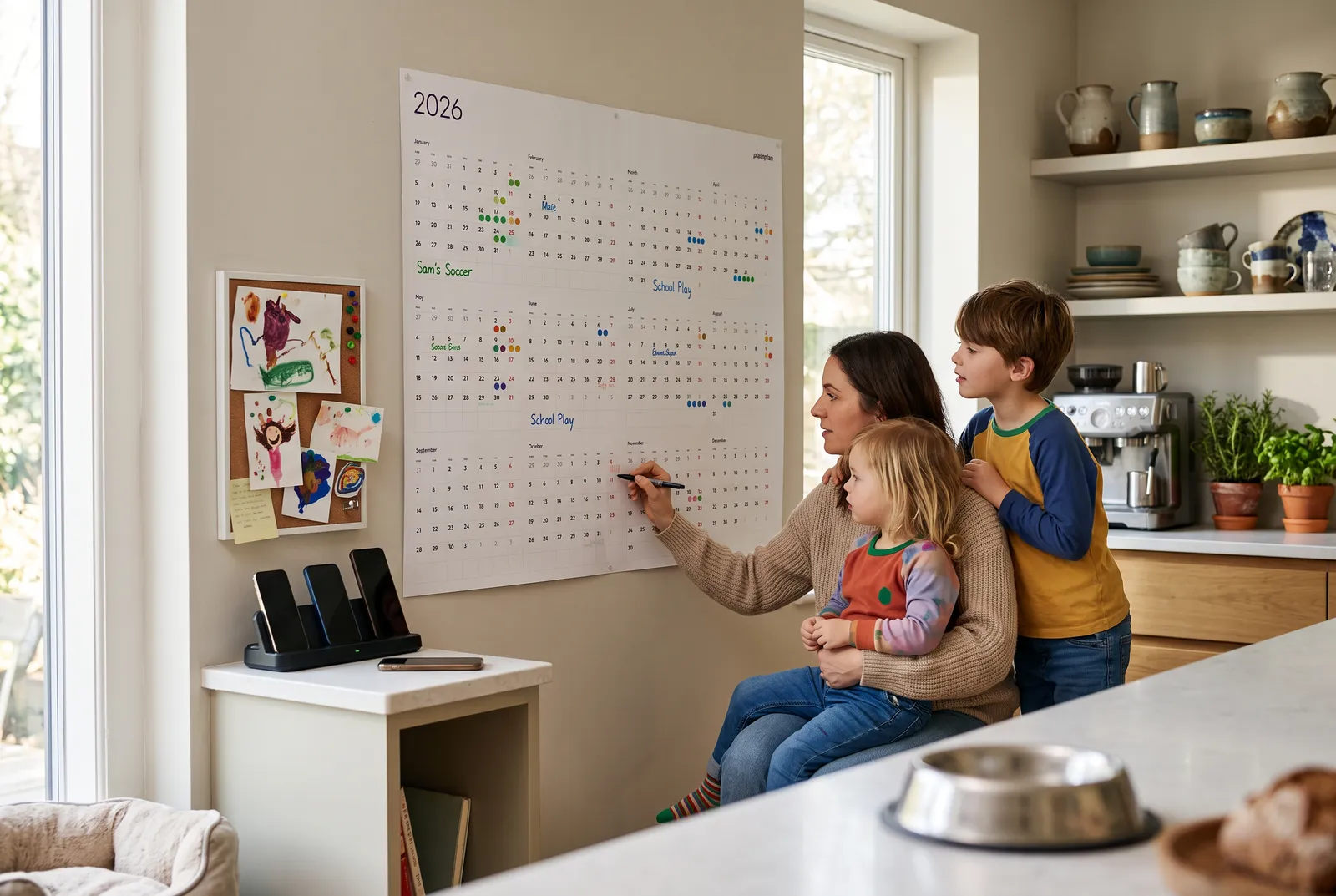
No more shouting across the house about soccer practice or forgotten permission slips. A wall planner at the center of a family command center gives every household member one shared view of the year - visible, physical, impossible to ignore.
What Is a Family Command Center?
A family command center is an organized wall space - usually in the kitchen, mudroom, or hallway - that holds the tools your household needs to stay synchronized. At its core sits a calendar or planner. Around it you might add a corkboard for notes, hooks for keys, a whiteboard for grocery lists, or a file sorter for mail.
The concept is simple: one wall, one glance, everyone knows the plan. It replaces the mental load of remembering who has what and when. Instead of keeping the family schedule in one parent’s head, you put it on the wall where every family member can see it.
Command centers work because they are passive. Nobody has to open an app or check a shared calendar notification. You walk past the wall, you see the week. That friction-free visibility is what makes the system stick.
Why a Wall Planner Works Better Than a Digital Calendar
Digital calendars are great for personal scheduling. They sync, they send reminders, and they live in your pocket. But for a family, they have a critical flaw: you have to actively check them. Kids do not check shared Google calendars. Partners forget to look at notifications.
A wall planner is always on. It does not need a password, a charged battery, or a notification setting. It is visible to anyone who walks by, including children who cannot use a phone yet. Everyone sees the same information at the same time.
The physical act of writing on a wall planner also improves recall. When a child writes “science fair” on Thursday with a marker, they remember it. When a parent types it into a phone, the child never sees it. For a broader comparison of physical vs. digital planning formats, see Yearly Planner vs. Monthly Calendar.
How to Set It Up
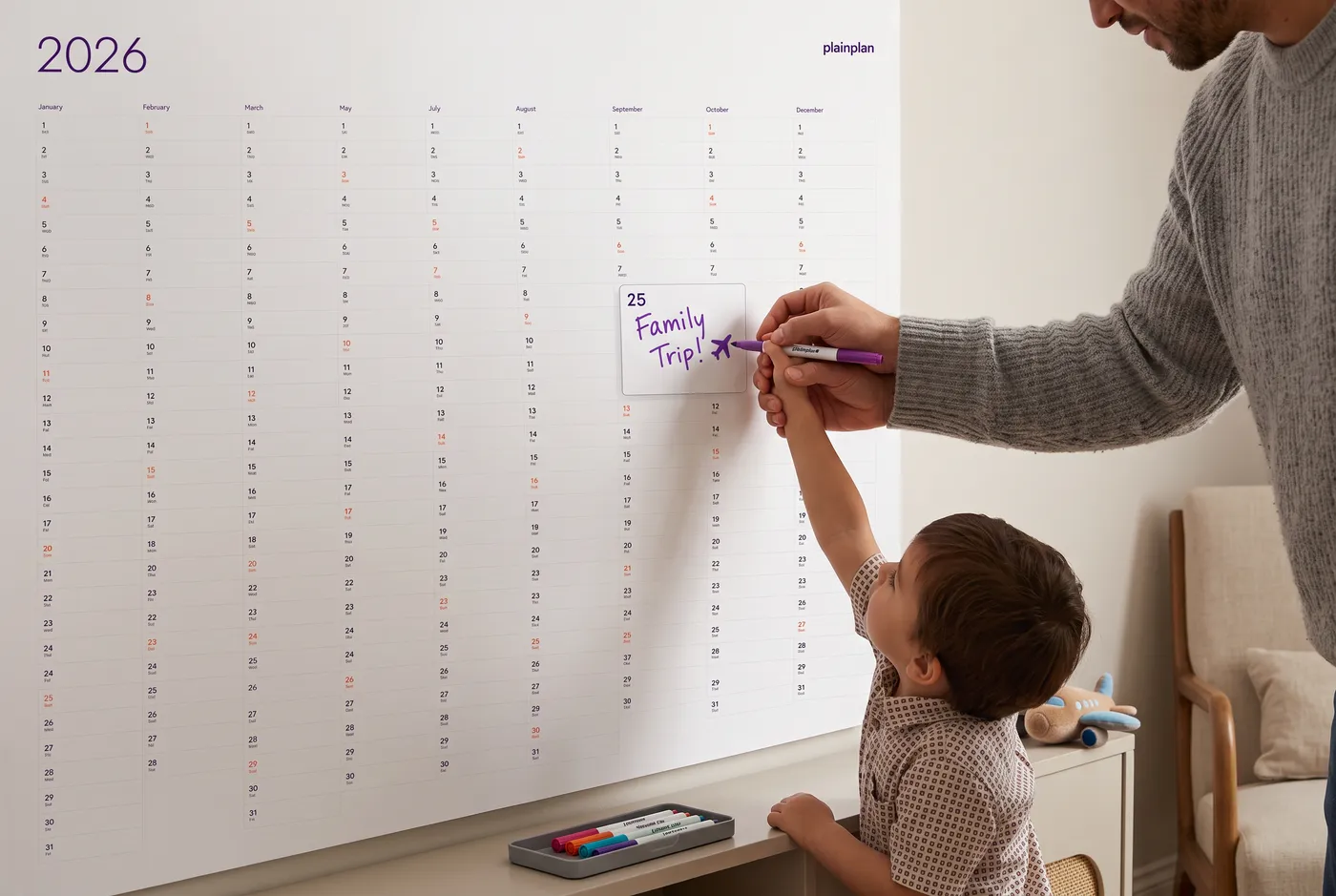
Choose a wall that the family passes multiple times a day. The kitchen is the most common choice. Clear the space and hang your yearly wall planner at eye level for adults - kids can use a step stool or you can hang a second copy lower.
Print your wall planner at A2 or A1 so the day cells are large enough to write in. Use poster strips or magnetic tape for a damage-free mount. Place a small cup or hook nearby to hold markers - if the markers are not within arm’s reach, nobody will update the planner.
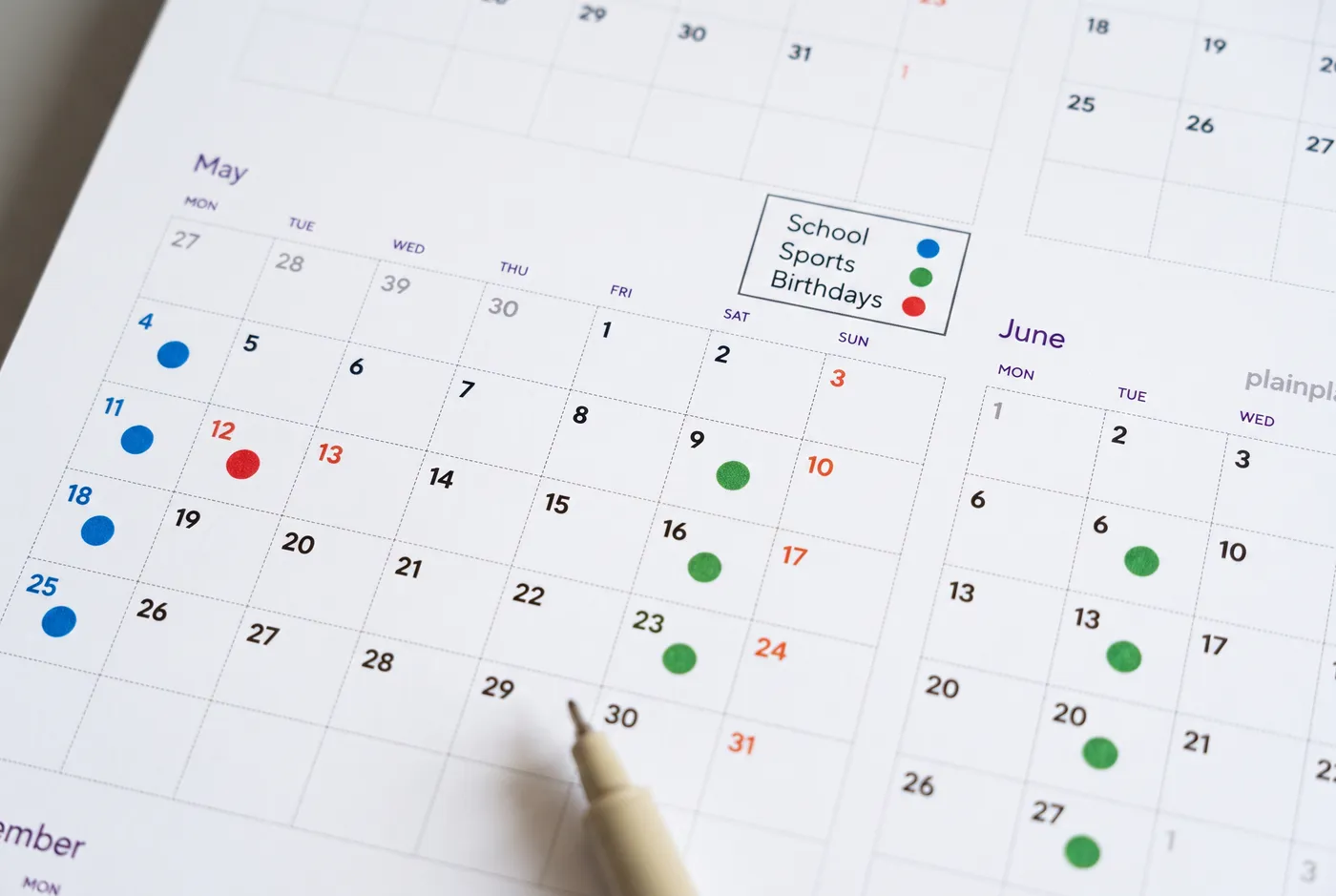
Add the big dates first: school terms, holidays, birthdays, vacations, recurring appointments. Use color coding - one color per family member or one color per category (school, sports, medical, social). Keep the system simple enough that a six-year-old can follow it.
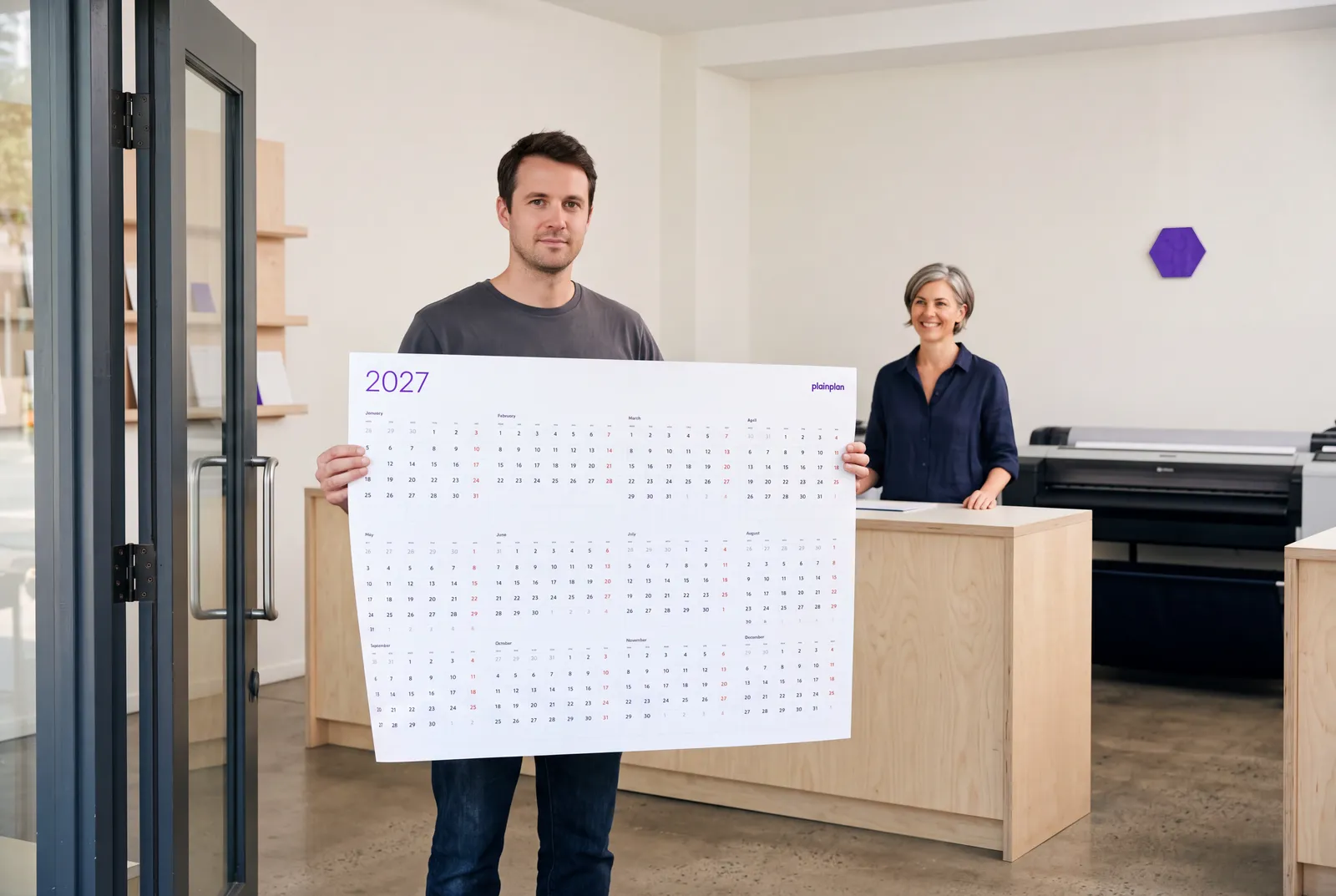
Try 2026 for free
before you buy 2027
One file. Any wall. Always sharp.
Tips for Getting the Whole Family On Board
Make it a Sunday habit. Every week, spend five minutes as a family reviewing the upcoming week on the planner. What is happening? Who needs a ride? What needs to be prepared? This short ritual prevents most scheduling surprises.
Let each family member own their color. When kids have their own marker and their own color, they take ownership of their schedule. They start checking the wall before asking you what is happening tomorrow.
Do not overload the planner with every minor detail. A wall planner is for the big picture - events, deadlines, trips, and recurring commitments. Daily to-do lists and hourly schedules belong on a separate board or a personal calendar. The wall planner answers one question: what is happening and when.
plainplan works well as a command center planner because it prints at any size. Start with A2 and upgrade to A1 if you need more writing space. The vector PDF stays sharp regardless of size, and you can reprint mid-year if the planner gets too marked up. For tips on using the full year view effectively, see How to Use a Wall Planner.
Frequently asked questions
The kitchen is the most common and most effective location because the whole family passes through multiple times a day. A hallway or mudroom near the front door is also a strong choice. Avoid rooms that family members visit only occasionally - visibility and habit are what make the system work.
A2 (420 × 594 mm) is a practical starting point - the day cells are large enough to write in and the sheet fits most kitchen walls. If you have a larger wall or want more writing space, A1 (594 × 841 mm) is ideal. plainplan is a vector PDF, so you can print at any size without losing quality.
Give each child their own marker color and let them write in their own events. Ownership drives habit. A weekly Sunday check-in where the family reviews the upcoming week together reinforces the routine. Keep the system simple - just major events, not every small task - so it never feels like a burden.
Yes - with a vector PDF you can reprint as many times as you like at any size. Print a fresh copy, re-hang it, and carry forward only the future events. This is one of the practical advantages of a downloadable vector file over a paper calendar bought in a shop.

Sources